Western FilmsNeo-WesternFilm HistoryModern Cinema
The Western Isn't Dead: Six Films That Prove Its Second Golden Age
From Kevin Costner's classical revival to the Coen brothers' existential masterpiece, these six films from the last 30 years stand equal to anything the genre produced in the 1940s and '50s.
Source material: screenrant.com
The Traditionalist's Victory
Kevin Costner's 2003 film 'Open Range' is a deliberate throwback, featuring Costner and Robert Duvall as ranchers drawn into a bitter land war against a wealthy baron. The plot intentionally echoes classic westerns like 'Shane,' but the film doesn't try to reinvent the genre. Instead, it uses familiar themes to create a well-paced, exciting experience that boils the western down to its best elements. Duvall's naturalistic charm and Costner's suited performance make the story feel fresh, proving that traditional formulas still work when handled with care. Costner had already shown his love for the genre with 'Dances with Wolves,' and 'Open Range' solidifies that commitment.
Myth in the Making
Roger Deakins' cinematography in Andrew Dominik's 2007 'The Assassination of Jesse James by the Coward Robert Ford' turns the western into a meditation on fame. The film takes its title from a novel, but the movie's real subject is how myth grows in real time. Jesse James (Brad Pitt) is portrayed as a paranoid figure, aging and exhausted, while Robert Ford (Casey Affleck) is a desperate admirer who wants a place in history. The pace is glacial—deliberately so—allowing every glance and gesture to carry weight. Deakins' use of shallow focus and golden-hour light creates a sense of inevitability, as if the characters are already ghosts. The film doesn't offer the clean heroics of classic westerns; instead, it shows violence as messy, awkward, and tragic. When the assassination finally occurs, it's almost anticlimactic, which is exactly the point. Dominik's film forces the viewer to reconsider what a western can be, and it remains a demanding but rewarding watch for those willing to sit with its melancholy.
A Remake That Earned Its Spurs
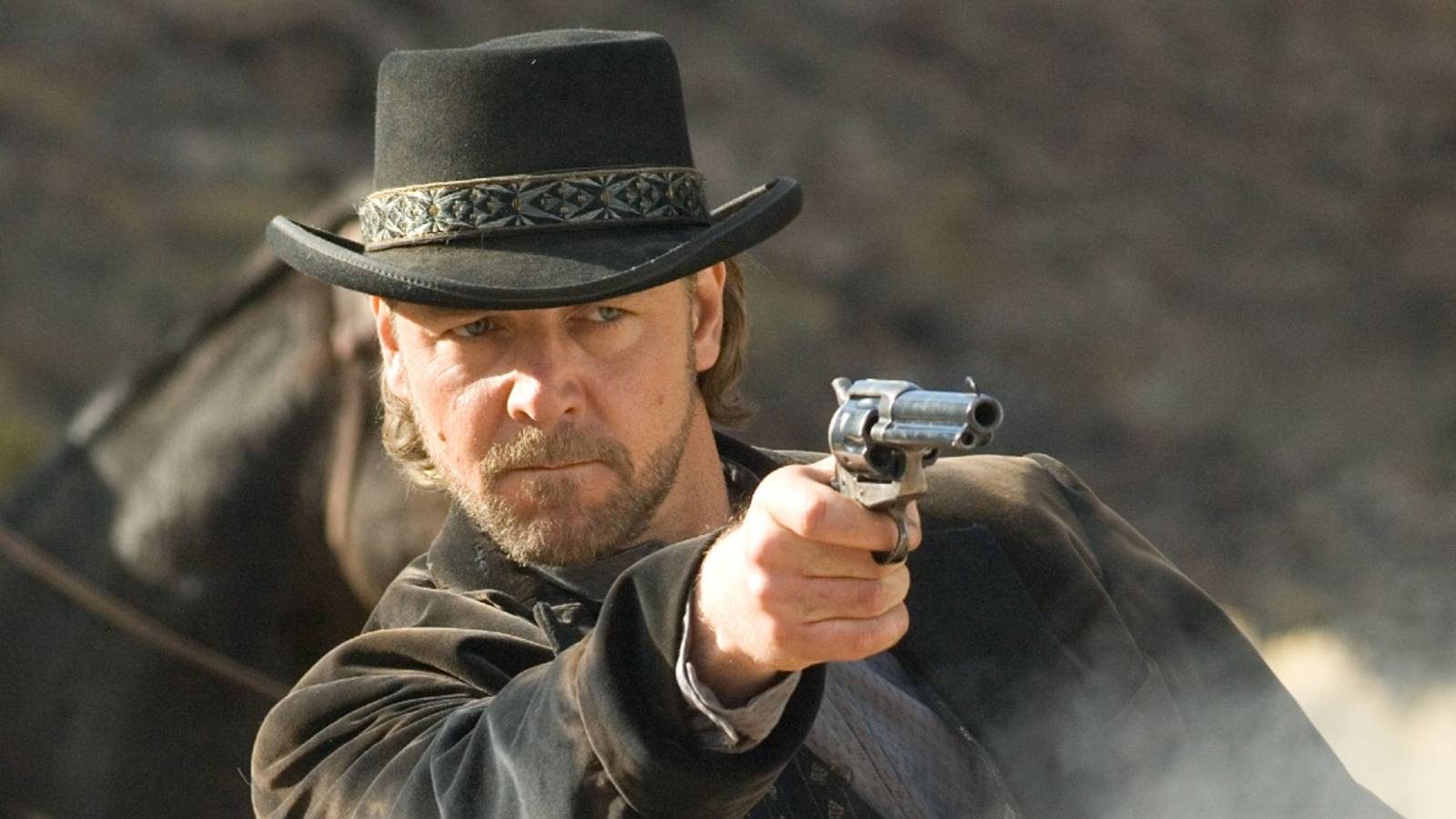
James Mangold's 2007 '3:10 to Yuma' proves a remake can improve on a classic. The original 1957 film starred Glenn Ford and Van Heflin in a taut moral drama, but Mangold's version expands the story into a full-scale western. Christian Bale plays Dan Evans, a rancher whose drought and debts push him to volunteer as an escort for notorious outlaw Ben Wade, played by Russell Crowe. The arrangement is simple: get Wade to the Contention train station by 3:10 and put him on the train to Yuma prison. Along the way, the two men develop a grudging respect, and the film's psychological tension is as sharp as its action sequences. Crowe's Wade is charismatic and unsettling, while Bale's Evans is a man clinging to dignity. The final act, where Wade chooses to help Evans escape a hostile gang, subverts expectations without betraying the characters. The film respects the original's themes but gives them room to breathe, making it one of the best westerns of the 21st century. Its success lies in the casting and the careful balance between violence and introspection.
The Coens' Revisionist Take
The Coen brothers' 2010 'True Grit' is less a remake of the 1969 John Wayne film than a return to Charles Portis's novel. The film is a bit rougher around the edges, with every detail feeling heightened. The plot follows a precocious young girl who hires a past-his-prime lawman to track down her father's killer, and they are joined by a Texas Ranger also on the hunt. Jeff Bridges gives a performance as Rooster Cogburn that is arguably his best in decades. The 2010 version is superior to the original in nearly every way, effortlessly cool with its own tone and preserving the genre's most appealing elements.
The Neo-Western Frontier
Taylor Sheridan's 2016 script for 'Hell or High Water' dragged the western into the 21st century without a single horse or six-shooter. The film follows two brothers who rob a series of banks—the same bank that is foreclosing on their family's farm. Their goal is to get enough cash to pay off the debt and save the land. A savvy lawman, near retirement, picks up their trail, and the cat-and-mouse game becomes a commentary on economic desperation in rural America. Sheridan, who also wrote 'Sicario' and 'Wind River', uses the heist-thriller structure to explore themes of justice, poverty, and legacy. The brothers are not heroes, but the film makes it impossible to root against them, especially when the bank is portrayed as the true villain. The modern setting doesn't dilute the western ethos; it sharpens it. The film's tension comes from the chase, but its power lies in the quiet conversations between brothers about their father's death and the future they're trying to build. 'Hell or High Water' is a proof that the western can adapt to any decade.
The Western That Broke the Mold
The Coen brothers' 2007 film 'No Country for Old Men' is a neo-western that won the Best Picture Oscar. Based on Cormac McCarthy's novel, it follows a hunter who stumbles upon a failed drug deal and takes a case of blood money. This sets off a relentless pursuit by a ruthless assassin, while an aging sheriff struggles to comprehend a changing world. The film is a western at its core, using its setting to examine notions of justice and truth. Its spare, unrelenting narrative and post-modern storytelling leave viewers without a clear hero to latch onto, establishing a new benchmark for the genre.