Grammy AwardsMusic IndustryArtist BoycottsBTS
The Grammy Walkout: When Music's Biggest Names Refuse the Prize
BTS's decision to pull out of Grammy consideration joins a long history of artists—from Sinéad O'Connor to the Weeknd—who have publicly turned their backs on the awards, each for reasons that reveal as much about the industry as the trophies themselves.
Source material: goldderby.com
The Boycott Heard Around the Pop World
The announcement landed with the force of a dropped bassline: BTS, the seven-member K-pop phenomenon whose fanbase ARMY has repeatedly mobilized award-show voting blocs, would not submit their music for Grammy consideration. The move sent shockwaves through an awards ecosystem already grappling with questions of relevance, but it was far from unprecedented. In fact, the industry has seen a parade of major acts step aside from the Grammys over the past decade, each for reasons that range from the principled to the petty to the purely practical.
The BTS decision caught many off-guard because the group had seemed to be on an upward trajectory with the Recording Academy. Their 2021 nomination for Best Pop Duo/Group Performance for "Dynamite" marked the first time a K-pop act had been recognized in a major category. But the group's management, Big Hit Music, reportedly grew frustrated with what they saw as the act's placement within sub-genres that failed to acknowledge their global impact. At the 2025 Grammy ceremony, BTS was scheduled to perform, yet the group's withdrawal signals a deliberate break from the annual ritual.
Silk Sonic's Sexy Exit
No act has exited the Grammy stage with more style than Silk Sonic, the duo of Bruno Mars and Anderson .Paak. When their collaboration album was eligible for the ceremony, the pair announced they would not submit it. "Silk Sonic would like to gracefully, humbly and most importantly, sexually, bow out of submitting our album this year," Mars told Rolling Stone.
The decision came as a surprise to industry insiders who had expected the group to dominate the major categories. Silk Sonic had previously performed at the Grammys and walked away with four wins for their earlier work. The duo's explanation was characteristically playful, with Mars adding: "We hope we can celebrate with everyone on a great year of music and partake in the party. Thank you for letting Silk Sonic thrive."
Unlike other artists who cited specific grievances, Silk Sonic offered no detailed critique of the Academy's processes. The move read more as a calculated artistic statement—a refusal to participate in a game they had already won on their own terms. It was a power move dressed in velvet and rhinestones.
The Weeknd's War on the Academy
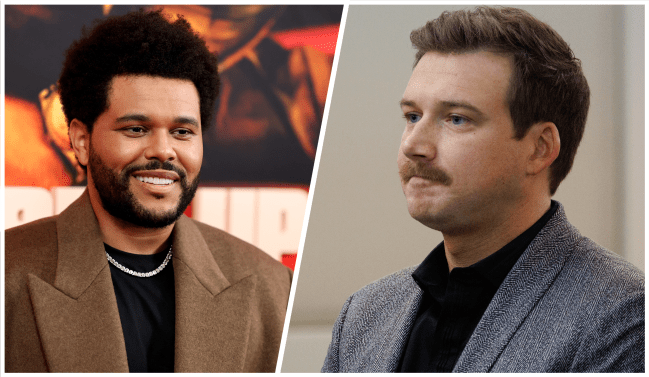
No boycott has been more consequential than that of the Weeknd. In 2020, his album After Hours, which spawned the inescapable hit "Blinding Lights," received zero Grammy nominations. The singer was incandescent with rage, taking to social media to call the nominations process "corrupt" and instructing his team to withdraw all future submissions.
His anger touched off a reckoning within the Recording Academy. The organization subsequently revised its nomination review committees—the panels of industry insiders that had long been accused of suppressing certain genres and artists—in favor of academy-wide voting. It was a structural change that came too late, some argued, to address the deeper biases at play.
The Weeknd's protest lasted four years. At the 2025 Grammys, he made a surprise appearance after receiving a nomination for Best Melodic Rap Performance. The return was not a full reconciliation—the artist has remained publicly skeptical of the institution—but it demonstrated that even the most principled boycotts can give way to strategic calculation when the right opportunity presents itself.
Drake's Inconsistent Walk
Drake's relationship with the Grammys has been marked by selective participation. In 2021, he withdrew his album Certified Lover Boy from consideration. Later, he submitted Her Loss, his collaboration with another artist, for consideration. No official explanation has been given for his decisions.
Sinéad O'Connor's Radical Refusal
Before the streaming era, before boycotts became a marketing strategy, there was Sinéad O'Connor. In 1991, the Irish singer released an open letter to the Recording Academy after receiving a nomination for her album I Do Not Want What I Haven't Got. She framed her refusal in explicitly political terms, writing: "They acknowledge mostly the commercial side of art. They respect mostly material gain."
The letter went on to describe the Grammys' focus on "material gain" as the organization's primary concern, noting that the awards had "created a great respect among artists for material gain—by honoring us and exalting us when we achieve it, ignoring for the most part those of us who have not."
O'Connor's protest anticipated many of the arguments later made by the Weeknd and Drake—that the awards system structurally privileges commercial success over artistic merit, and that participation in the ceremony constitutes an implicit endorsement of those values. Her stand was all the more striking for coming at the height of her commercial success, when a Grammy would have cemented her mainstream status.
The Silent Protest of Morgan Wallen
The most recent addition to the boycott club came not from an artist defending their artistic integrity, but from one whose controversies had made the institution's embrace politically fraught. Morgan Wallen's decision to not submit his record I'm the Problem for Grammy consideration came after years of run-ins with various awards bodies.
In 2021, Wallen was caught on video using a racial slur, leading to his suspension from multiple industry organizations. Later, he was charged with reckless endangerment after throwing a chair from a rooftop bar. While other groups imposed explicit bans, the Grammys had largely ignored his work even before the scandals.
When I'm the Problem became a significant country hit, Wallen quietly opted out of submission without explanation. The decision drew attention less for its defiance than for its pragmatism—a recognition, perhaps, that the Grammy apparatus would not reward him regardless of the music's commercial performance. His quiet exit contrasts sharply with the Weeknd's public condemnation, suggesting that the New York-based institution's struggles may run deeper than any single artist's grievance.