Postpartum PsychosisMurder TrialCourt EvidenceMental Health
8 moments from the Lindsay Clancy trial that will decide her fate
From the children's discovery to the nanny's testimony, these sections trace the evidence and testimony that will determine whether the jury sees postpartum psychosis or premeditation.
Source material: biography.com
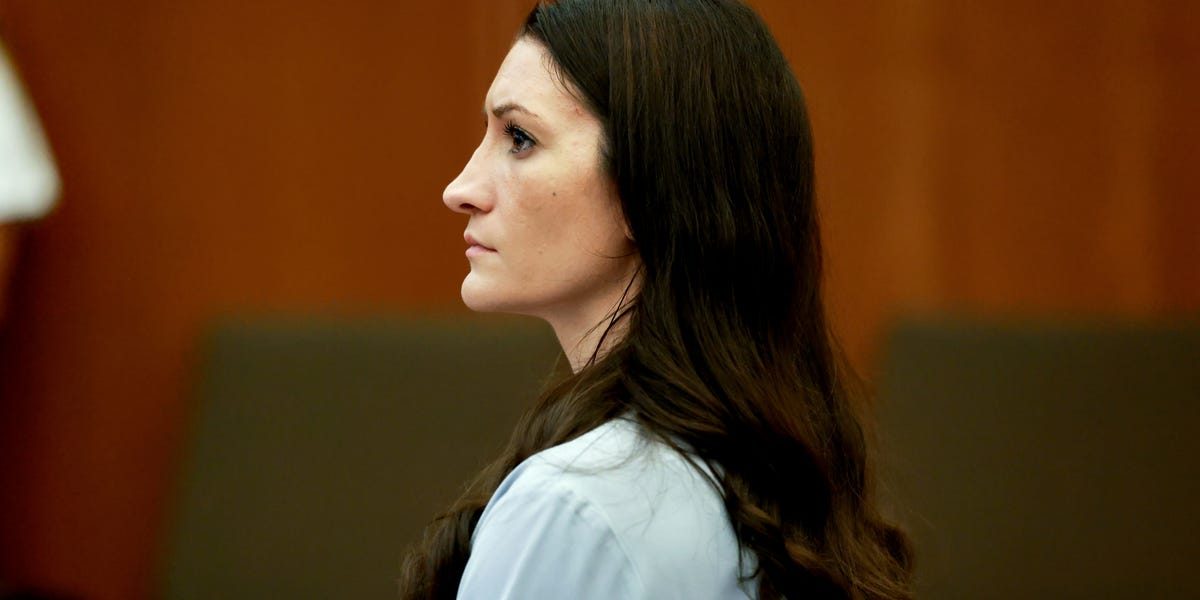
The afternoon the children were found with exercise bands around their necks
On Jan. 24, 2023, Lindsay Clancy took her daughter to a pediatrician, played in the snow with her children, then asked her husband, Patrick, to pick up takeout and a prescription at a nearby pharmacy. When Patrick got home, he found Lindsay semi-conscious and bleeding outside the house; she said she had tried to jump from a second-story window. Inside the basement, he found Cora, 5, Dawson, 3, and Callan, 8 months, with exercise bands wrapped around their necks. Cora and Dawson were pronounced dead at the hospital that day; Callan was placed on life support but died Jan. 27. The medical examiner ruled the deaths ligature strangulation. Lindsay survived the fall but is now paraplegic and uses a wheelchair. All three children were under 6 at the time. The 911 call Patrick made that night was later admitted into evidence, with a limiting instruction.
Three murder charges and an insanity defense
Lindsay Clancy, 35, is charged with three counts of first-degree murder in the deaths of her children. At her Feb. 7, 2023, arraignment, conducted from a Boston hospital bed, she faced three additional counts each of strangulation and assault and battery with a dangerous weapon. She pleaded not guilty. Prosecutors later dropped the strangulation counts, calling them redundant alongside first-degree murder. After the arraignment, Judge John Canavan ordered her held at a medical facility until treatment was complete. The defense does not dispute that Clancy killed her children. Instead, it argues she was in the grip of postpartum psychosis and should be found not guilty by reason of insanity. A request for a bifurcated trial—one phase for guilt, another for criminal responsibility—was denied. If convicted on the murder charges, Clancy faces a mandatory life sentence. If found not criminally responsible, she could be committed to a mental health facility rather than prison.
A nurse who asked to be hospitalized weeks before the killings
Born Aug. 11, 1990, in Wallingford, Connecticut, Lindsay Clancy completed an accelerated nursing program at Massachusetts General Hospital and worked there as a labor and delivery nurse for nine years. She married Patrick Clancy in December 2016, and the couple had Cora in December 2017, Dawson in September 2019, and Callan in May 2022. Postpartum anxiety appeared after Cora and Dawson; after Dawson, she managed it with exercise, meditation, and therapy. After Callan, symptoms escalated: hypomanic behavior, anxiety, about three hours of sleep per night, exhaustion, voices, and suicidal thoughts. She sought help from postpartum specialists but was only diagnosed with generalized anxiety disorder. In December 2022 she told Patrick she needed to be hospitalized, and on Jan. 1, 2023, she was admitted to McLean Hospital, a top psychiatric institution, only to be discharged after five days. Patrick later said she had tried more than a dozen medications.
Patrick Clancy's testimony about the week before the deaths
Patrick Clancy, the first witness called when testimony began July 27, described the days before the killings. He spoke extensively about Lindsay's medical history, medications, and demeanor. He took Cora skiing on Jan. 16 and shared pictures with Lindsay, who “seemed to be doing a lot better,” he testified. On the day of the killings, he said, Lindsay appeared to be having one of her best days, with no visible signs of suicidal thinking. Patrick had previously issued a statement weeks after her arraignment saying he had forgiven her: “Our marriage was wonderful and diametrically grew stronger as her condition rapidly worsened.” He added that she “taught me how to be a better father.” His testimony has become central to the prosecution's argument that Lindsay was coherent and capable of planning her actions, while the defense points to the same details as evidence of how well she hid her distress.
Crime scene photos show a knife, the window, and the bands
Photos shown in court trace the scene investigators documented inside the Duxbury home. A Massachusetts State Police crime scene supervisor testified that blood evidence was found in the bedroom, on a nightstand, a mirror, and a windowsill, with stains also outside near the window. A knife was photographed on the nightstand. The exercise bands prosecutors say Clancy used to strangle her children were collected as evidence, along with various prescription medications. The second-story bedroom window is where Clancy is accused of trying to kill herself after the killings; she survived and was left paraplegic. The defense has acknowledged that Clancy caused the children's deaths, but maintains her mental state at the time should absolve her of criminal responsibility. The house at 47 Summer Street was sold in 2024, and the new owner objected to a jury visit—Judge William Sullivan allowed the visit anyway.
Diary entries and Google searches put her mental state on the record
During the first eight days of testimony, both the prosecution and defense read from Lindsay Clancy's diary, which described brain fog, anxiety, and a feeling of drowning in the months before the deaths. Police investigators also detailed her digital footprint: Google searches related to suicide and a Notes app entry to her children. “I am sad and depressed because I cannot parent my third child like my first,” the note read. “I want to treat every one of my babies like my first. I am sad I stopped breastfeeding. I feel not as connected with Cal now.” The diary and phone records are central to the defense's argument that Clancy was in severe mental distress. Prosecutors point to the same entries as evidence of awareness. The court ruled that only medical experts may discuss Clancy's mental health diagnosis; other witnesses are barred from offering one.
The trial is playing out before 18 jurors and could last two months
Jury selection began July 20 at Plymouth County Superior Court and took four days, seating 18 jurors—12 women and six men. The trial is expected to last six to eight weeks. The prosecution listed 168 potential witnesses; the defense listed about 50, mostly character witnesses. Judge William Sullivan has ruled on contested evidence, including autopsy photographs and photos of the children alive, which the jury may see. Witnesses other than Clancy's family members will be sequestered. The trial has already been delayed three times; it was initially supposed to begin in February 2026, but both sides asked for more time to prepare for what they called a discovery-intensive case. On Aug. 12, proceedings were paused twice as Clancy cried and whispered “I can't do it” during the medical examiner's testimony about her children's autopsies.
The nanny's testimony and the family's public image
The family's former nanny, Elaine Rossi, testified that Lindsay Clancy was a “wonderful mom who loved her kids” before what the defense says was her postpartum psychosis. Patrick Clancy's mother, Susan Clancy, told the grand jury that Lindsay was “a fun-loving, doting wife and mother” who “loved her kids, and was a nurturing mother who smiled all the time.” Those descriptions anchor the defense's portrait of a woman whose behavior changed under illness. The prosecution, by contrast, called witnesses who described Lindsay as coherent and engaged on the day of the killings—she took her daughter to a pediatrician, played in the snow, and asked for takeout. The jury must weigh these competing images against the medical testimony and the physical evidence, including the exercise bands and the blood-spattered bedroom.