Lindsay ClancyMurder TrialPostpartum PsychosisCrime Scene Evidence
9 Revelations from the Lindsay Clancy Case: From a Bloody Knife to a Paraplegic Defendant
A nurse's descent into postpartum psychosis, a husband's forgiveness, and the digital trail of suicide searches—key evidence and testimony from the Duxbury mother's trial for killing her three children.
Source material: tmz.com

Crime Scene Photos Showed a Bloody Knife and Medications
During the murder trial, prosecutors presented crime scene photographs taken inside and outside Lindsay Clancy's Duxbury, Massachusetts home. The images showed a bloody knife on a nightstand, various prescribed medications, and the second-story bedroom window where Clancy allegedly attempted suicide. A Massachusetts State Police crime scene supervisor testified that investigators documented blood evidence in the bedroom, on a nightstand where the knife was photographed, on a mirror, and on the windowsill, as well as stains near the window outside. The photographs also captured the exercise bands prosecutors allege were used in the killings. These images formed a visual record of the crime scene. The defense, while acknowledging Clancy's responsibility for the deaths, argues that severe postpartum psychosis prevented her from being criminally responsible. The photos are a key part of the prosecution's narrative.
Lindsay Clancy's Background: Nurse, Wife, Mother
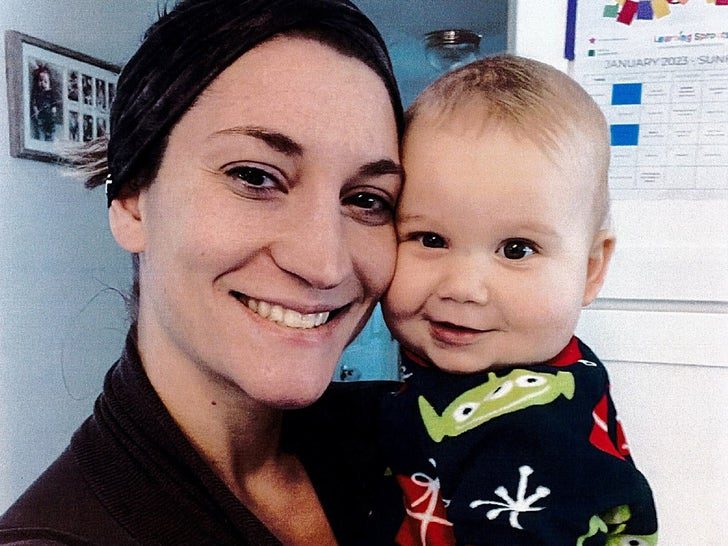
Lindsay Marie Musgrove was born on August 11, 1990, in Wallingford, Connecticut. She attended a rigorous accelerated nursing program at Massachusetts General Hospital and worked there as a labor and delivery nurse for nine years. In December 2016, she married Patrick Clancy. The couple had three children: Cora, born in December 2017; Dawson, in September 2019; and Callan, in May 2022. The family lived in Duxbury, Massachusetts. Patrick's mother, Susan Clancy, described Lindsay to a grand jury as a "fun-loving, doting wife and mother" who "loved her kids and was a nurturing mother who smiled all the time." This background stands in contrast to the tragic events. Her profession as a labor and delivery nurse adds a heartbreaking irony to the case.
Postpartum Mental Health Crisis and Hospitalization
After the births of Cora and Dawson, Lindsay Clancy experienced postpartum anxiety, which she managed with exercise, meditation, and therapy. After Callan's birth in May 2022, symptoms escalated dramatically: she exhibited hypomanic behavior, slept only about three hours per night, suffered from debilitating anxiety and exhaustion, heard voices, and had suicidal ideation. She sought help from postpartum mental health specialists but was only diagnosed with generalized anxiety disorder. In December 2022, she insisted she needed to be hospitalized; on January 1, 2023, she was admitted to McLean Hospital, a top psychiatric institution, but discharged after just five days. Patrick later confirmed she had tried more than a dozen medications. This history forms the foundation of the defense's argument that she suffered from undiagnosed postpartum psychosis.
The Events of January 24, 2023
On January 24, 2023, Lindsay Clancy took her daughter to a pediatrician appointment and later played in the snow with her children. She asked her husband Patrick to pick up takeout and medication at a nearby pharmacy. Witnesses described her as fully coherent during these interactions. When Patrick returned, he found Lindsay semi-conscious and bleeding outside near the second-story window; she claimed she had tried to jump out in a suicide attempt. The fall left her paralyzed, and she survived. Inside the home, he discovered all three children in the basement. This timeline shows that the murders occurred during what appeared to be an ordinary day. The prosecution used this to argue that Clancy was lucid and deliberate in her actions.
Charges and Trial Proceedings
Lindsay Clancy was arraigned from her bed in a Boston hospital on February 7, 2023, charged with three counts each of murder, strangulation, and assault and battery with a dangerous weapon. She pleaded not guilty. In October 2023, she was ordered held without bail. The trial began on July 20, 2026, at Plymouth County Superior Court in Plymouth, Massachusetts. Jury selection took four days, resulting in a jury of 12 women and 6 men. Just days before the scheduled start, prosecutors dropped the three strangulation charges, citing redundancy with the first-degree murder charges. The trial, expected to last six to eight weeks, will determine if Clancy is criminally responsible. If convicted of first-degree murder, she faces a mandatory life sentence.
Patrick Clancy's Testimony and Forgiveness
Patrick Clancy testified as the first witness for the prosecution. He described taking his daughter Cora skiing on January 16 and sharing pictures with Lindsay, noting that "she seemed to be doing a lot better" and that her mood had improved. He also described January 24 as "one of her best days," showing no signs of suicidal ideation. Weeks after her arraignment, Patrick issued a public statement forgiving Lindsay, saying her passion "taught me how to be a better father." He added, "Our marriage was wonderful and diametrically grew stronger as her condition rapidly worsened." His 911 call, recorded after he found Lindsay outside, was admitted into evidence. The prosecution argued the call had probative value regarding her state of mind.
Psychiatrist Testimony: Dr. Shah and Dr. Tufts
Dr. Sejal Shah, a psychiatrist who examined Clancy multiple times days after the killings, testified that Clancy was "calm and cooperative" during assessments and initially denied having suicidal and homicidal ideations and hallucinations. However, Shah stated that this does not disprove that Clancy was in a state of psychosis at the time of the murders. Clancy's primary psychiatrist, Dr. Jennifer Tufts, was questioned at length about the medications she prescribed, with the defense grilling her over her decision to conduct virtual visits instead of in-person sessions. Additionally, multiple mental health professionals testified that they observed no signs of psychosis or mania in the weeks leading up to the killings. This conflicting testimony will be critical for the jury's decision, as the jury must determine whether Clancy was legally responsible for her actions.
Digital Footprint: Suicide Searches and Notes App
Police investigators presented evidence of Lindsay Clancy's digital footprint on the days surrounding the killings. This included Google searches related to suicide and a note she had written in a Notes app entry detailing her depression and thoughts on motherhood. The note read: "I am sad and depressed because I cannot parent my third child like my first. I want to treat every one of my babies like my first. I am sad I stopped breastfeeding. I feel not as connected with Cal now." The digital records were entered into evidence. The searches for suicide methods were timestamped in the days before the killings. The note expressed her sadness about parenting, breastfeeding, and her connection with her youngest child. In the note, she referred to her youngest child as 'Cal.' The prosecution argued that the searches were preparatory to a suicide attempt, while the defense argued that they were a manifestation of her mental illness. The note itself stood as a recorded expression of her state of mind at the time.
Clancy's Current State: Paraplegic and Detention
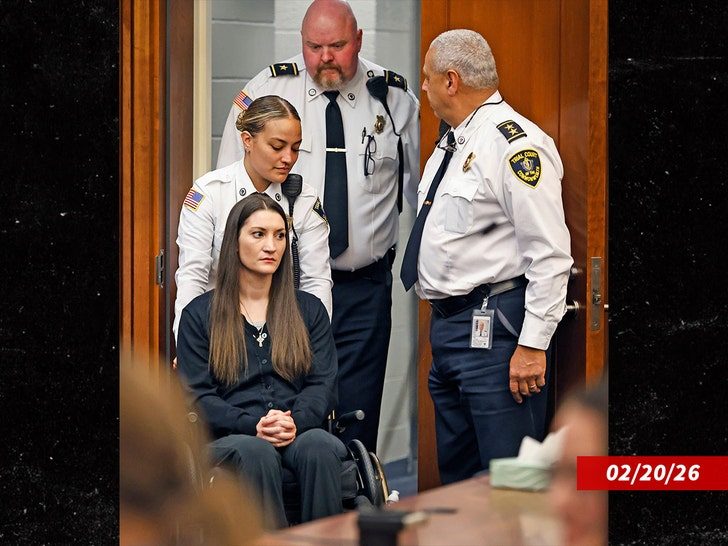
Following her suicide attempt on the day of the killings, when she allegedly went through a second-story window, Lindsay Clancy survived but was left paralyzed. She is now paraplegic and confined to a wheelchair. She has been held at Tewksbury Hospital in Massachusetts awaiting trial. Her trial began in July 2026, and she appears in court in a wheelchair. The severity of her injuries adds a complex layer to the proceedings. The defense has used her condition to argue that she has already suffered severe consequences, but the prosecution maintains that her physical state is irrelevant to her legal responsibility. Her confinement at Tewksbury Hospital, a state psychiatric facility, underscores the intersection of mental health and criminal justice in this case.