Jaafar JacksonMichael JacksonWill SmithSupermax
Amidst Critical Division and Billion-Dollar Success, Jaafar Jackson's Career Moves to a Sequel with Will Smith
With a confirmed April 2026 sequel date, a 130-minute runtime, and the addition of Will Smith and AnnaSophia Robb, the Michael star's next chapter unfolds after reshoots and ensemble acclaim.
Source material: cbr.com
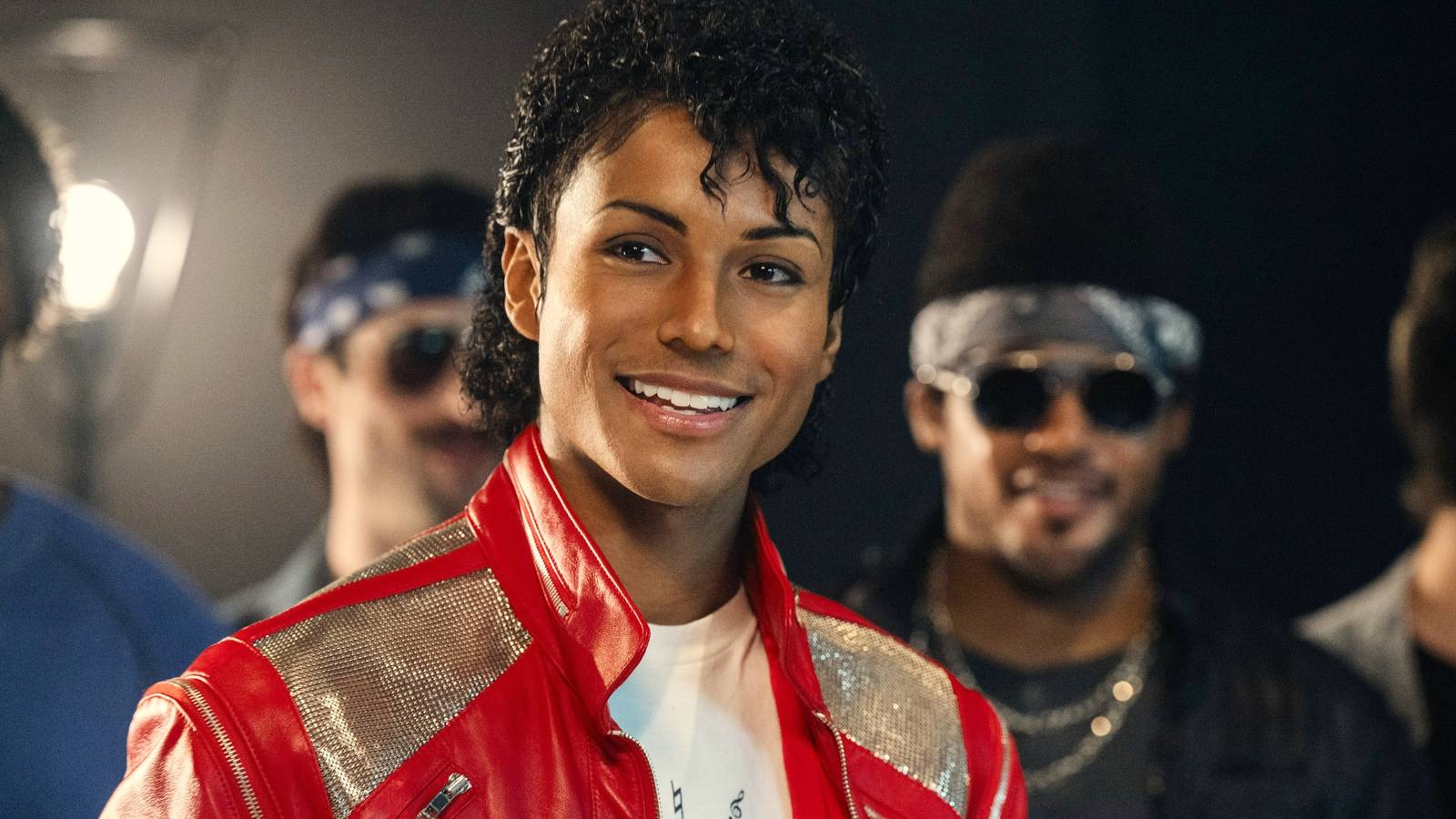
The Michael sequel is dated April 24, 2026, with a 130-minute runtime already locked
Lionsgate has set April 24, 2026 for the Michael follow-up, locking in a 130-minute runtime. John Logan — the screenwriter whose credits span Gladiator, The Aviator, and Skyfall — is handling the script. Graham King, John Branca, and John McClain are all returning as producers, reassembling the core team behind the original. Director Antoine Fuqua confirmed during the first film's press run that principal photography captured enough material for a second chapter covering Jackson's later career and the decades that followed. The original film's record-setting box office gave Lionsgate every reason to accelerate development. Whether Jaafar Jackson's commitment to Amazon MGM's Supermax creates scheduling friction between the two projects remains an open question, but the studio's willingness to pin down a release date this far in advance suggests the sequel is moving firmly toward production.
Supermax drops Jackson into an unsolvable maximum-security prison murder
The thriller centers on what most investigators would consider an impossibility: a killing committed inside a maximum-security prison, a facility specifically built to prevent that kind of crime. Two FBI agents are assigned to crack the case, operating in an environment where every suspect is already incarcerated and every witness carries a criminal record. Amazon MGM Studios and Miramax are co-producing the project, with a direct-to-streaming release planned on Prime Video — no theatrical window is expected. Exact plot specifics beyond the central premise are being kept tightly guarded. The setting places Jackson in a genre entirely removed from the musical biopic that launched his screen career. Where Michael asked him to inhabit one of the most famous performers in modern history, Supermax will test whether he can anchor a straight dramatic thriller alongside one of Hollywood's most bankable names.
Jackson's role is described as 'pivotal to the film's central plot'
Deadline, which broke the casting news, characterized Jackson's character as 'pivotal to the film's central plot' — language that signals considerably more than a supporting turn. Specific details about who he plays remain under wraps, a level of secrecy studios typically reserve for roles carrying major narrative weight. The casting marks Jackson's first announced project since Michael crossed the billion-dollar mark, and the decision to pair him with Will Smith on a high-profile production rather than slot him into a sprawling ensemble reflects the commercial expectations now attached to his name. The transition ahead is demanding. Michael required him to inhabit a figure the entire world already recognized. Supermax will ask him to construct a character from scratch — no famous mannerisms to replicate, no audience preconceptions to lean on.
Will Smith and AnnaSophia Robb lead the FBI agent pairing
Smith's involvement in Supermax was announced in May, when Amazon MGM Studios closed the deal for worldwide rights to the Miramax project. He plays one of the two FBI agents at the story's center. AnnaSophia Robb, who joined the cast last month, takes the role of his young detective partner. Jackson's casting rounds out the three leads announced so far. The pairing gives Supermax an unusual star dynamic. Smith brings decades of global box office credibility — his filmography runs from Independence Day through the Bad Boys franchise — while Jackson enters as a screen newcomer on only his second professional project. Robb's character is described as a partner rather than a subordinate, setting up a built-in tension between experience and fresh instinct at the FBI pairing's core.
David Gordon Green directs, bringing horror franchise instincts to a prison thriller
David Gordon Green is set to direct Supermax, an action thriller under the banners of Amazon MGM Studios and Miramax. With a directorial portfolio that includes the 2018 reboot of Halloween and The Exorcist: Believer, Green brings a proven track record in crafting suspenseful narratives. This expertise is particularly suited to the film's premise: two FBI agents delve into a baffling murder case inside a high-security prison, a scenario ripe for the claustrophobic tension Green is known for. The script is written by David Weil and David J. Rosen, ensuring a tightly woven plot. Production is handled by The Picture Company's Andrew Rona and Alex Heineman, with Will Smith and Adam Fishbach's Westbrook Studios contributing. The film will be released directly on Prime Video, offering audiences a gripping thriller that capitalizes on Green's ability to transform confined spaces into arenas of high-stakes drama. While no official release date has been set, the combination of Green's directorial flair and the intriguing prison setting makes Supermax a highly anticipated entry in the action-thriller genre.
Michael became the first biopic in history to cross $1 billion
Michael crossed the $1 billion mark at the worldwide box office, becoming the highest-grossing biopic ever made and the first in the genre's history to reach that threshold. Critics were divided on the film itself, with assessments ranging across the spectrum, but the audience turnout was beyond dispute. That figure is the engine powering every subsequent development in Jackson's career: the sequel greenlight, the Will Smith pairing on Supermax, and the industry-wide assumption that he can anchor major productions. No biopic before Michael had ever approached that ceiling. The film opened in a crowded marketplace and still dominated weekend after weekend, a signal that Jackson's portrayal of his uncle resonated well beyond the core audience of existing Michael Jackson fans and into the broader moviegoing public.
Critics praised Jackson individually even as they divided on the film overall
While Michael received mixed reviews, Jackson's lead performance was the one element critics consistently singled out for praise. Writers who found the film too long, too reverential, or too cautious still acknowledged his work as the production's most compelling asset. That distinction carries real weight for his trajectory: the industry's evaluation of Jackson as a capable actor — separate from the biopic's controversies — is what drives casting conversations for projects like Supermax. The new role will demand something fundamentally different. There is no iconic figure to channel, no famous mannerisms to recreate from decades of archival footage. Whether Jackson can build a character from scratch, without the scaffolding of portraying someone the audience already knows intimately, will determine if the biopic's critical goodwill translates into a lasting acting career.
The original cut ran three and a half hours, with 30 percent banked for the sequel
The first assembly of Michael ran three and a half hours — a runtime that would have placed it among the longest wide-release films in recent memory. The final theatrical cut was trimmed substantially, but director Antoine Fuqua confirmed that roughly 30 percent of the filmed footage remains unused and is reportedly available for the sequel. That material covers Jackson's later career, spanning decades the first film's narrative only touched in its final act. With the sequel's runtime already locked, the follow-up has a substantial foundation of completed footage to draw from without requiring an entirely new production cycle. The practical advantage is significant: the sequel can move faster and at considerably lower cost than a film built entirely from scratch, which may explain the studio's willingness to announce a date this early.
The third act was completely reshot to remove abuse-allegation scenes
The most controversial production decision behind Michael involved the wholesale revision of its third act. Early versions of the film included sequences directly addressing the child sexual abuse allegations that shadowed Michael Jackson's later years. Those scenes were filmed, then cut and replaced through reshoots that steered the narrative away from the accusations entirely. The change drew pointed criticism from reviewers who labeled the final product 'sanitized,' a characterization that has followed the film through its theatrical run and into awards-season discussion. Whether the sequel — covering the same later period of Jackson's life — revisits that material or continues to sidestep it represents the single largest creative question hanging over the franchise. The production's willingness to reshoot an entire act rather than include the scenes speaks to deep institutional caution about the subject matter.
The biopic's ensemble cast helped deliver the genre's biggest-ever result
The supporting roster brought substantial dramatic credibility alongside Jackson's lead performance. Colman Domingo played Michael's demanding father Joseph Jackson. Nia Long portrayed mother Katherine Scruse-Jackson. Miles Teller took on the role of John Branca, the entertainment attorney who became central to Jackson's business dealings. KeiLyn Durrel Jones appeared as Bill Bray, and Laura Harrier played Motown executive Suzanne de Passe. The ensemble helped anchor the film's emotional arc across its full runtime, even as critics debated the production's broader narrative choices. With the sequel officially greenlit, the question of which cast members reprise their roles — and which new real-life figures enter the story — will determine whether the franchise commits to a complete portrait or continues the careful editorial approach that defined the first film.