Fantasy Film HistoryTolkien LoreIan McKellenMythological Themes
Gandalf's Defiance: The Line That Defined Fantasy's Moral Compass
In Peter Jackson's 2001 film, a wizard's stand on a bridge in Khazad-dûm became an eternal testament to sacrifice, distilled into four words that still dominate the genre.
Source material: cbr.com
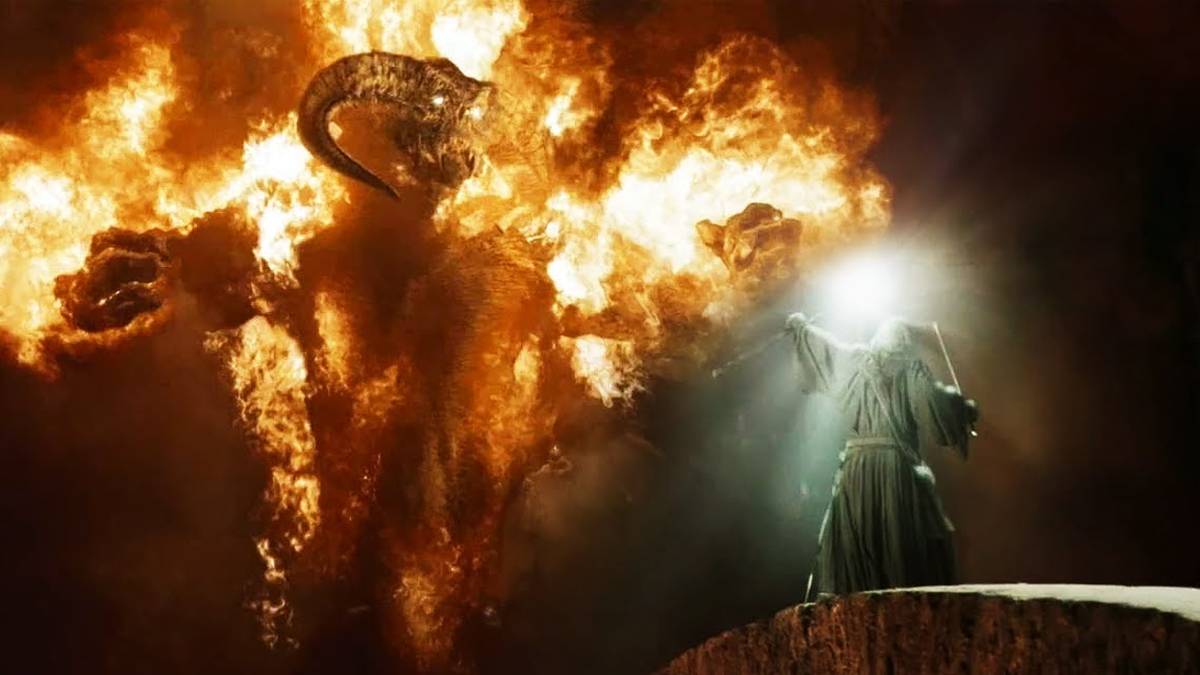
The Bridge of Khazad-dûm: A Scene Forged in Fire
Peter Jackson's The Fellowship of the Ring introduced audiences to a cinematic moment that would harden into legend. As the Fellowship flees the collapsing Dwarven realm of Khazad-dûm, Gandalf the Grey, played by Ian McKellen, turns to face the Balrog—a towering Maia corrupted by Morgoth's influence. McKellen raised his staff and delivered the line with a blend of divine authority and weary resolve: 'You shall not pass.' Jackson's adaptation amplified Tolkien's source material, adding dramatic fire and sound to a confrontation that, in the novel, was more restrained. The scene's power lies in its visual contrast: a fragile, elderly figure blocking a path of shadow and flame, setting a template for heroic last stands that few fantasy films have since matched.
Tolkien's Theology Unleashed: Eru Ilúvatar and the Flame Imperishable
Gandalf's declaration carries the weight of J.R.R. Tolkien's entire cosmology. As a Maia—an angelic spirit created by the deity Eru Ilúvatar before the world Eä was formed—Gandalf served as a steward of Ilúvatar's Secret Fire, the Flame Imperishable that ignited creation itself. In the film, his invocation of 'the flame of Anor' references either the Sun, guided by a fellow Maia, or Narya, the Elven Ring of Fire he wielded. This contrasts with the Balrog's origins in Utumno, the fortress of Morgoth, the first Dark Lord. Tolkien's later works, like The Silmarillion, delve into these hierarchies, revealing that Gandalf's stand was not just physical but a theological assertion: a faithful servant of creation defying a slave of corruption, with Ilúvatar's design underpinning the clash.
Ian McKellen's Portrayal: Humility as Heroism
Ian McKellen's performance distilled Gandalf's essence—a being of immense power who chose limitation to guide Middle-earth's free peoples. McKellen brought relatable warmth to the role, his Gandalf the Grey a more approachable figure than the radiantly powerful White Wizard he would become, yet capable of fierce conviction in the face of evil. This duality made 'You shall not pass' resonate; it was not a boast of strength but a sacrifice rooted in duty. McKellen conveyed divine grace through human vulnerability, a portrayal that became the benchmark for wizards in modern fantasy. His Gandalf reflected Tolkien's vision: a Maia who intentionally reduced himself to maintain the balance of power in Middle-earth.
Spoiler: Sacrifice, Resurrection, and the Core of Tolkien's Worldview
Spoiler warning: This section reveals critical plot developments. Gandalf's fall after the quote is not an ending but a transformation. He pursues the Balrog into the abyss, fighting for days atop Zirakzigil before succumbing to injuries—a detail expanded in Tolkien's Unfinished Tales. His resurrection as Gandalf the White was a direct intervention by Eru Ilúvatar, an event so rare it marked the only known death reversed by Tolkien's God since the cataclysm of Númenor. What followed in the Timeless Halls—'out of thought and time,' where 'every day was as long as the life-age of the Earth'—Gandalf was reborn with far greater power. Yet his greatest victory was his humility, which defined him both before and after.
A Legacy Cast in Stone: 25 Years of Unchallenged Supremacy
As Peter Jackson's trilogy approaches its 25th anniversary in 2026, 'You shall not pass' remains fantasy cinema's most enduring line. Subsequent adaptations—from The Hobbit to The War of the Rohirrim to Amazon's The Rings of Power and the upcoming film The Hunt for Gollum—have yet to produce a quote with comparable cultural penetration. The phrase permeates memes, merchandise, and academic discourse, often cited in debates about heroic ethics. Its staying power stems from its synthesis of spectacle and substance: a visually arresting moment backed by deep lore and moral clarity. For many, it defines how fantasy measures heroism—not by conquest, but by the choice to stand against overwhelming darkness for the sake of others.