SpotifyStreaming SubscriptionsEarningsAI Music
Spotify's 300 Million Milestone: Revenue Gains, AI Bets, and a Share Dip
Despite a historic subscriber count, rising costs and a 4% share drop complicate the win as co-CEOs tout AI's '3Cs'.
Source material: hollywoodreporter.com
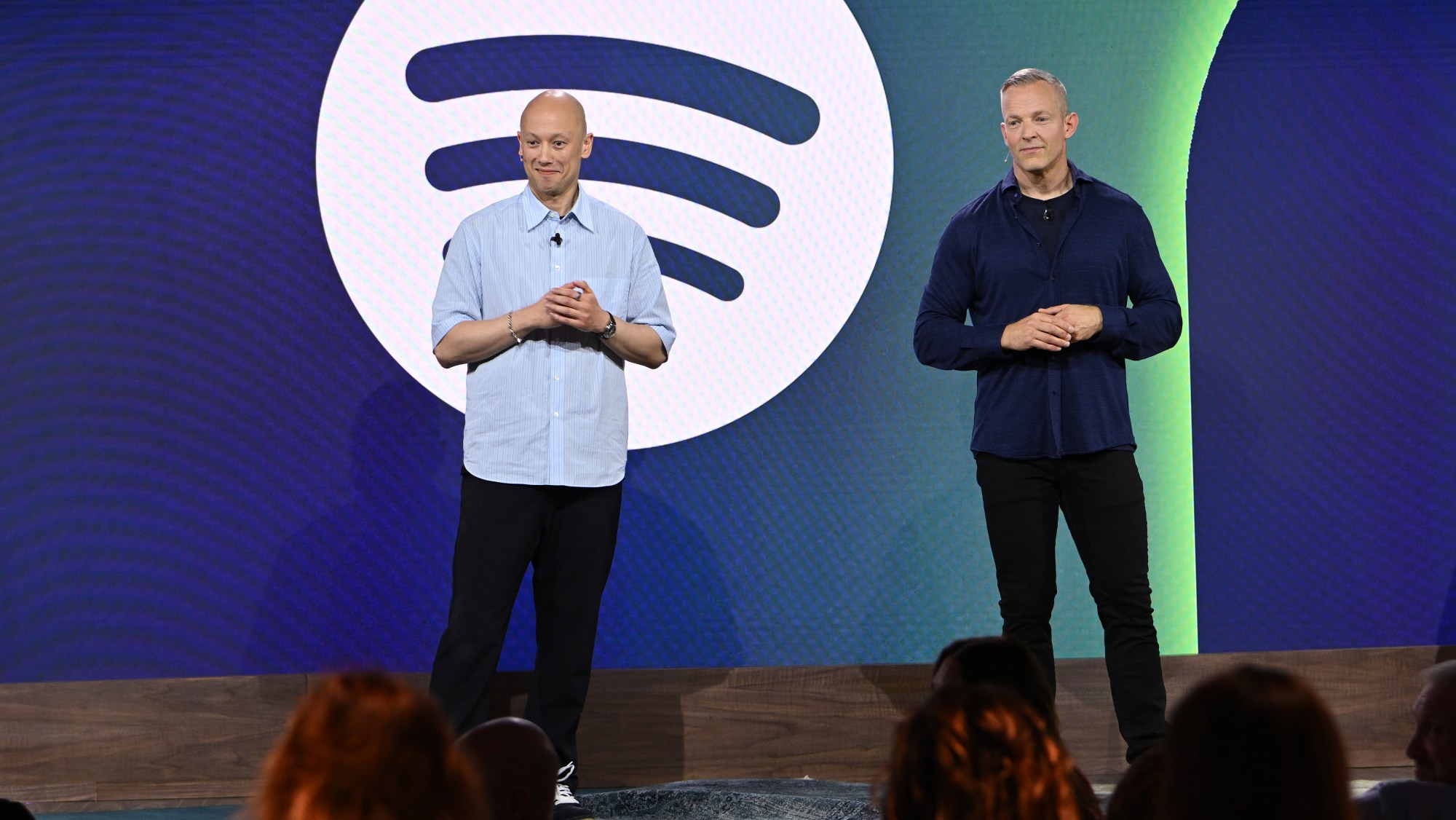
Spotify Crosses 300 Million Paying Subscribers
As of the end of June, Spotify counted 300 million premium subscribers, up from 293 million three months earlier and slightly above the 299 million it had forecast. The company called the figure "a milestone no audio streaming service has ever reached," pointing to year-over-year and quarter-over-quarter growth across all regions. The 7 million net additions in the quarter show the paid tier is still accelerating even as monthly active users fell just short of projections. Premium subscriptions carry the service's economics: they account for the largest share of revenue, and their growth is what makes the company's wider investments possible. The fact that gains are spread across every region—not concentrated in a single market—gives Spotify a base to build new products on. That consistency, executives said, is why the subscriber number matters as a foundation, not just a headline.
Revenue Growth Accelerates to 14%
Spotify's second-quarter revenue came in at €4.8 billion ($5.5 billion), a 14% increase year over year, or 15% on a constant-currency basis. That's an acceleration from the prior quarter's pace, and it matched the company's own forecast. Operating income hit €655 million ($754 million), up 61% from the same period last year and ahead of management's guidance. The gain came even though operating expenses rose slightly, driven by what the company described as temporary investments in marketing and cloud/AI infrastructure. The revenue acceleration was led by subscriber strength, Spotify said, and profitability is now a central theme for investors after several rounds of price increases and cost cuts. The company's ability to expand margins while still spending on AI is what underpins its confidence in future growth. In its earnings statement, Spotify noted that the business is positioned to deliver improved growth and margins in 2026 as it reinvests to support long-term potential.
Q3 Guidance: 305 Million Subscribers and €5 Billion Revenue
Spotify guided to 305 million premium subscribers, 788 million monthly active users, €670 million in operating income, and €5 billion in revenue for the third quarter. The subscriber target implies about 5 million net adds, a slower quarterly pace than the service has been running, and the MAU projection likewise points to a deceleration. Executives explained on the earnings call that the slowdown is deliberate: Spotify will change products in emerging markets to better monetize those user bases. Co-CEO Alex Norström said, "Sometimes we pull the growth lever and sometimes we pull the monetization lever. Now here we're starting to pull the monetization lever." Revenue of €5 billion would maintain double-digit growth from the first half, while operating income of €670 million signals continued margin expansion from the €655 million reported in the second quarter. The forecast reflects a strategic pivot from raw user growth toward higher revenue per user, a trade-off that shapes the coming quarter.
Spotify's '3Cs' for AI Music: Consent, Credit, Compensation
Spotify executives spelled out the principles governing its AI remix tool, which they call the "3Cs." Co-CEO Alex Norström said the company wants artists to "consent" to having their work used for AI-generated covers and remixes, to give them "credit," and to ensure "compensation" to labels, publishers, artists, and songwriters. The framework is designed to address the legal and ethical concerns that have accompanied generative AI in music. By requiring consent before songs enter the remix catalog, Spotify hopes to avoid the backlash faced by other platforms that trained models on unlicensed work. Credit provisions mean creators are named when their work is transformed, and compensation promises a revenue share, though the exact rates aren't public. The 3Cs align with the deals signed with Universal Music Group and now Merlin. Norström described the approach as "very considerate and planned out," emphasizing that the rollout will be deliberate. The tool is still in development, but the policy framework suggests Spotify is trying to build AI features that don't alienate the artists it depends on.
Costs Rise 3%, Shares Drop 4%
Spotify's operating expenses climbed 3% in the second quarter, a rise the company attributed to "temporary investments in marketing and cloud/AI spend." The increase came on top of a period when profitability had been a focus after price increases and cost cuts. Despite the higher costs, operating income improved significantly year over year, but investors were not impressed: shares fell more than 4% in pre-market trading. The stock drop suggests that the market weighed the slower user growth guidance and the rising spending against the profit gain. The cloud/AI portion of that spending is likely linked to the company's new artificial intelligence tools, including the upcoming remix feature, which demands substantial computing resources. Marketing investments appear aligned with efforts to convert free users to premium in emerging markets. Spotify's leadership characterized these expenses as temporary and part of a reinvestment plan for long-term growth. The company reiterated that it expects improved growth and margins by 2026. The share decline reflects a trade-off investors are still assessing: investing in AI and marketing today for bigger returns tomorrow.
Co-CEOs Comment on Subscriber Milestone
Co-CEO Alex Norström and Gustav Söderström addressed the company's position during the earnings call. Norström said, "We have a scale that few companies in history have reached, a business that is healthy and compounding, and opportunities only we are positioned to pursue." He noted that Spotify lives across users' whole day—the commute, the workout, studying, gaming, the dinner table, and sleep. Söderström said, "Investor Day described where we believe Spotify is going in the future. This quarter demonstrated that we are already building that future: better engineering, faster shipping, new products and new ways for users to engage. We are still in the very early stages of what is possible and will continue to have a high bar for investments." He concluded: "Our job remains the same: understand the technology early and deeply, and turn it into something people love. Creating value for our stakeholders."